LinkedIn post booster
Most posts that flop are not bad ideas. They are good ideas in the wrong order: the best line sits in paragraph three, the text runs in one block nobody finishes, and the ending asks for nothing. Paste yours below and get it back rewritten, with a list of every change and the reason for it.
Result
This is the shape of what comes back. Fill in the form, or hit "Try an example", and the grey turns into words.
Writing, usually 15 to 30 seconds.


Example run
The best line was in the middle
The demo draft has a real story in it and puts it in the middle of a 120-word paragraph. Nothing in the rewrite is invented: the same five people, the same numbers, the same opinion, in an order a reader can follow.
What went in
- The post to improve
- I wanted to share some thoughts about hiring that have been on my mind lately. We've been growing the team over the past year and I think one of the things we've learned, and I'm not sure everyone will agree with this, is that hiring for experience is maybe not always the right call. We hired three people last year who had a lot of years on their CV and honestly two of them didn't work out, whereas the two people we took a chance on who were more junior but really curious have both been fantastic and one of them is now leading a project. I think what matters more is whether someone is genuinely interested in the problem you're solving. Anyway, those are my thoughts, would love to hear what others think about this.
- What to improve
What came back

Atta Ur Rehman Shah
Co-Founder @ Depost AI — Your AI content team for LinkedIn · Just now
We hired three senior people last year. Two did not work out. The two we took a chance on were more junior and more curious. Both are still here, and one of them is now leading a project. I am not going to pretend that is a rule. It is five people. But it changed what I look for first in an interview: not the years on the CV, but whether someone is genuinely interested in the problem we are solving. That is hard to fake for an hour and impossible to fake for a year. If you have hired both ways, which held up better for you?
What changed
The strongest fact in the draft sat in the middle of a paragraph; it now lands above the "see more" cut, where it decides whether anyone reads the rest.
One 120-word paragraph became four short ones, so the post is readable on a phone without pinching.
"I think", "maybe", and "I'm not sure everyone will agree" were softening a claim the draft had evidence for.
The admission that this is five people stays, because it is what makes the claim credible rather than what weakens it.
"Would love to hear what others think" asks for nothing in particular; asking which approach held up better gets answers you can reply to.
Beyond the demo
This page writes from a form. Depost AI writes from your own posts and analytics.
The generator above works with whatever fits in a few fields. Connect LinkedIn to Depost AI, the AI content team B2B founders and teams run on LinkedIn, and the same kind of draft starts from your analytics, your voice, and the buyers you are actually trying to reach.
Drafts that start from your analytics
The agents read your posting history first: the hooks that earned the click, the pillars your audience answers, the rhythm of what worked. The draft sounds like you because it learned from you, not from a form.
A reply ready for every person who matters
Build custom lists of the people you want to stay visible to. Their new posts arrive in one feed with a comment drafted in your voice under each. You edit or approve every one before it goes anywhere.
From draft to published, without the paste
Finished drafts go to the queue and publish through LinkedIn’s official API, with the first comment written alongside. Connection notes and follow-ups are drafted with the context already in place. Nothing goes out until you approve it.
Connect LinkedIn and you have a strategy, your pillars, and your first post ideas in about fifteen minutes.
How to use it
- 1
Paste the whole post
Including the ending. The tool judges the closing line, so a fragment gets you a rewrite of a fragment.
- 2
Pick a goal, or leave it on Auto
Auto finds the biggest problem itself. Pick a specific goal only when you already know what is wrong.
- 3
Read the changes list first
Before the rewrite. The list tells you what was wrong with the draft, which is the part you keep after you close the tab.
- 4
Take the edits you agree with
It is a draft, not a verdict. Your words are still in there, so putting something back is one edit, not a rewrite.
- 5
Check it in the feed before you publish
The post preview shows where the "see more" cut lands on your new first line.
The four things it fixes first
Most underperforming posts fail in the same four places, and the order matters because the first one decides whether the other three are ever seen.
The best line is buried. The strongest fact in a draft is usually in the middle, where the writer arrived at it. LinkedIn shows about three lines before the "see more" cut, so a post that spends them warming up has already lost the readers who would have stayed.
The wall of text. A 120-word paragraph is fine on a page and unreadable on a phone. Splitting it changes no words and changes how many people reach the end.
The "I think" habit. "I think", "maybe", "just", "I'm not sure everyone will agree." Each one asks the reader to discount the claim before they have read it, and they are almost always attached to the claims the writer had the best evidence for.
The ending that asks for nothing. "Thoughts?" and "Would love to hear what others think" ask for nothing in particular and get it. A question narrow enough to have a real answer is the difference between eleven comments and none.
Which goal to pick
Six options sit under the box. Auto handles most posts, and the others exist for the times you already know what is wrong with the draft.
Auto. Finds the biggest problem and fixes that first, instead of touching everything evenly. Use it unless you have a reason not to.
Reach. Spends its effort on the opening line, on making the post finishable on a phone, and on an ending someone can reply to. The right pick when the post was fine and nobody saw it.
Clarity. One idea per paragraph, plain words, and every sentence that repeats a point already made comes out. For the post you had to read twice.
Authority. Leads with the claim and the evidence already in your draft, and cuts the "I think" and "maybe" around it. For a post where you knew what you were talking about and did not sound like it.
Storytelling. Finds the moment in the draft, opens on it, and lets the lesson arrive at the end rather than in line one. For a post that explains something that actually happened.
Shorter. Cuts to the shortest version that keeps every fact and the point. Losing sentences is the goal, so expect it to be ruthless.
Getting a better result out of it
Paste the messy version. The draft with the number you were not sure about and the opinion you softened. Those are the parts a rewrite can actually use, and a post you have already tidied gives it nothing to work with.
Run it twice. Once on Auto, once on the goal you suspect. Comparing two rewrites of your own post teaches you more about what was wrong than either one alone.
Bring one real number. A post with a specific figure, date, or name in it improves more than a post made of general advice, because there is something concrete to open on.
Put back anything it lost. The rewrite keeps your words, so restoring a line you wanted is one edit rather than starting again. Treat the result as a draft you are editing, not a replacement you accept.
Use it before you publish, not after. Editing a post that is already live does not restart its distribution, so the value is in the next draft. Take the changes list as notes for that one.
What it will not do
It will not add engagement bait. LinkedIn rebuilt feed ranking in March 2026 and named engagement bait among the things it pushes down, alongside repetitive low-substance posts, so "comment YES if you agree" now costs a post reach rather than buying it. How the algorithm works in 2026 has the sources.
It will not invent anything. No statistic that was not in your draft, no client, no result, no story. If your post makes a claim without evidence, the rewrite makes the same claim without evidence, because the alternative is a tool that invents things you then publish under your name.
And it will not rewrite a good post for the sake of it. A draft that already works comes back close to how it arrived, with a short changes list saying so. Ten things that move a LinkedIn post covers what to do before you paste anything in here.
Questions
- What does a LinkedIn post booster do?
- It takes a post you already wrote and rewrites it to perform better, without changing what you said. In practice that means moving the strongest thing in the draft to the first line so it lands above the "see more" cut, breaking a wall of text into paragraphs a phone can read, cutting the hedging, and replacing a vague closing question with one people can actually answer.
- Will it change what my post says?
- No. It is instructed to keep every fact, number, name, and claim exactly as you wrote them, and to keep your opinion even where a different one would be easier to defend. It never invents a statistic, a client, or a story that was not in your draft. What changes is the order, the shape, and the words that were doing no work.
- Will it still sound like me?
- That is the main constraint on it. The rewrite works from your vocabulary and your level of formality rather than replacing them with a house voice, because a post that reads like software wrote it performs worse than the flat draft you started with.
- What does the "what changed" list tell me?
- Every edit it made, named and explained in a sentence. That half matters more than the rewrite: a tool that just hands back a better post teaches you nothing, while one that shows you the line you buried, the word that weakened your claim, and the ending nobody could answer means your next draft needs less fixing.
- Which goal should I pick?
- Auto, most of the time. Posts usually have one obvious problem and it is rarely the one the author would have chosen. Pick a specific goal when you already know what is wrong: Shorter when the draft rambles, Authority when you hedged a claim you can back, Storytelling when there is a moment buried in the middle.
- Does boosting a post help it go viral?
- It improves the things that decide reach, which is as far as anyone can honestly go. Since LinkedIn rebuilt feed ranking in March 2026, relevance can outrank recency, so a post that earns attention keeps surfacing for days. What it will not do is add engagement bait, because LinkedIn names that as something it pushes down.
- Is it free?
- Yes, without an account. A daily cap keeps it available for everyone. Your post is sent once to generate the rewrite and is not stored.
- Can I boost a post that already went out?
- You can rewrite it, but editing a published post does not reset its distribution, so the better use is the next one. Take the changes list as a note for the draft you have not published yet.
From the blog
All posts Content Creation10 Tips to Make LinkedIn Posts Go Viral in 2026Ten things that move a LinkedIn post in 2026, and what the March algorithm rebuild changed about how far one travels after the first hour.
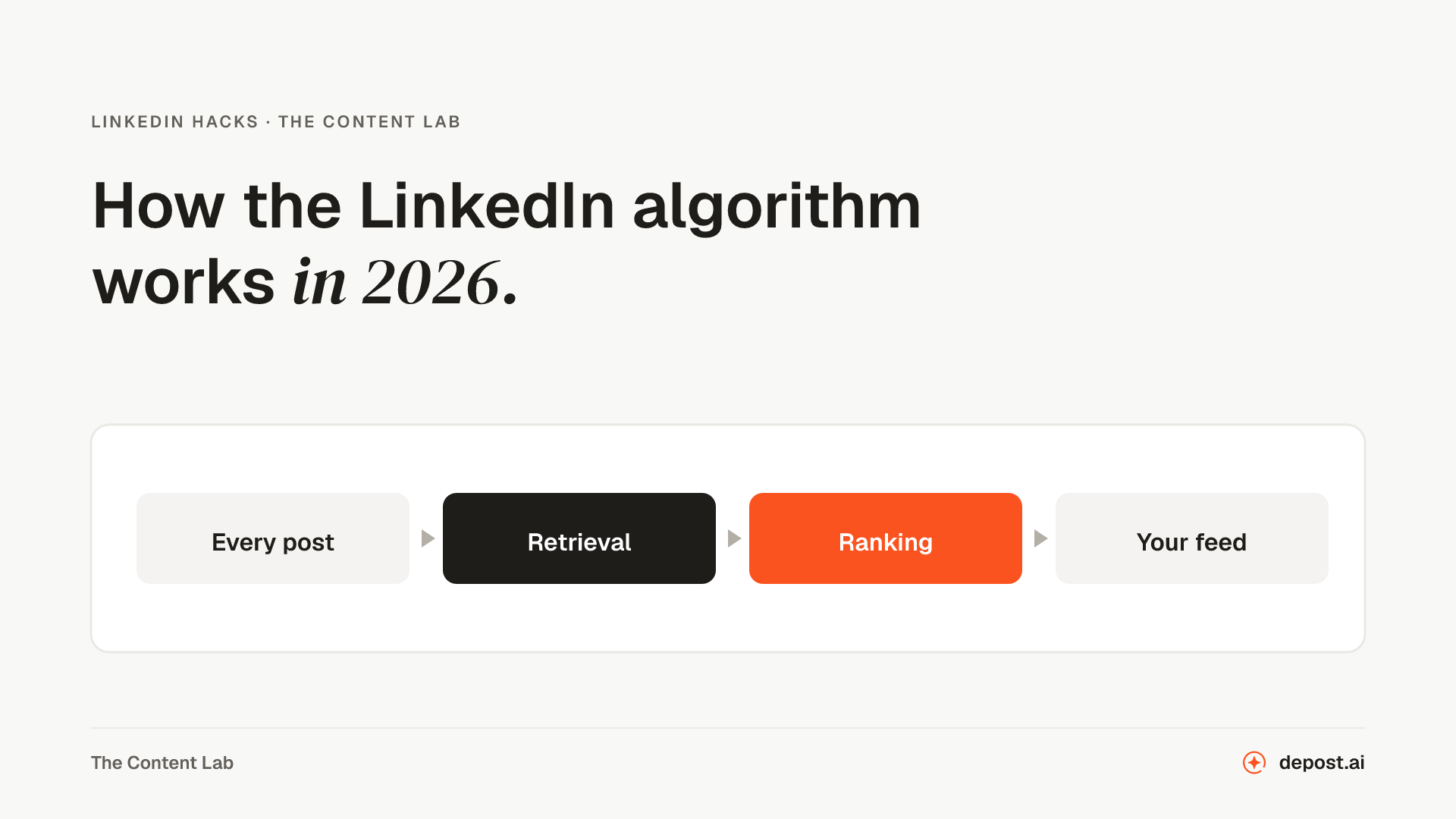 LinkedIn GuidesHow the LinkedIn Algorithm Works in 2026LinkedIn rebuilt feed ranking in March 2026 and published how it works. Here is what the company confirmed, what third parties measured, and what is still guesswork.
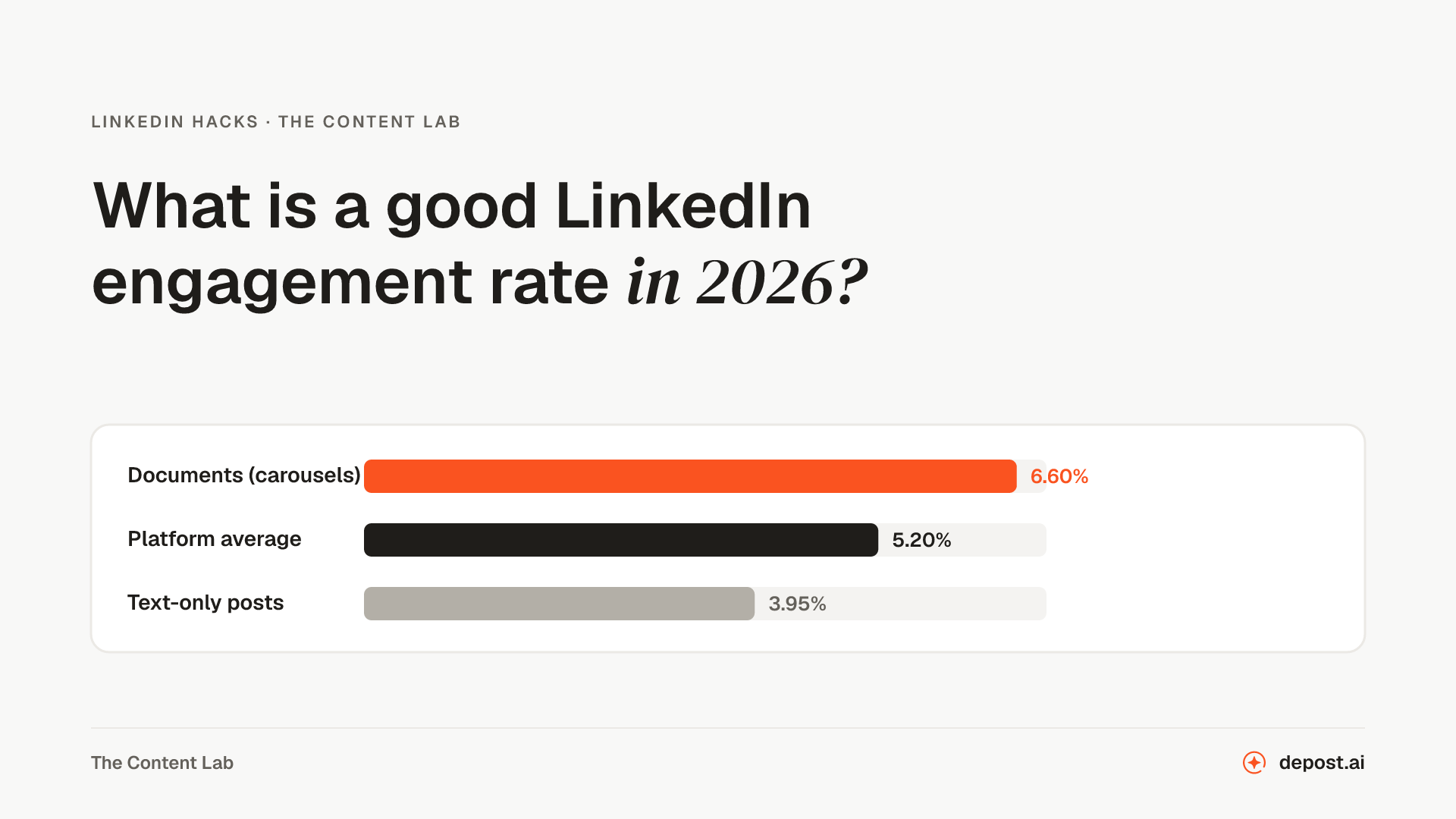 LinkedIn GuidesWhat Is a Good LinkedIn Engagement Rate in 2026? Benchmarks by FormatThe 2026 benchmarks by format, the three formulas behind them, why two different rates for the same post can both be right, and what actually moves the number.
Next
LinkedIn Viral Post Generator
A finished post from a rough thought, a link, or a few bullet points, with the hook, the pacing, and the ending the feed rewards.
LinkedIn Hook Generator
Several openings for a post you have already written, since the first two lines are the only part most people see.
LinkedIn Post Preview
See where the "see more" cut lands and how the post reads on a phone, before you publish rather than after.
Make LinkedIn your
best-performing channel.
Brief your team once. It studies, plans, writes, designs, and schedules. You approve.
Your brief comes with you: once you're set up, it's the team's first job.
7 days free · Strategy in your first 15 minutes · Cancel anytime