LinkedIn post analyzer
Paste a post and get a grade out of 100 against a fixed rubric: hook, structure, specifics, reader payoff, and length. Under the score, the exact lines to rewrite, a rewrite for each that keeps your facts and your voice, and the lines worth keeping. It grades the writing, not the reach: no tool can see your audience from the text, and this one does not pretend to.
Result
This is the shape of what comes back. Fill in the form, or hit "Try an example", and the grey turns into words.
Grading, usually 10 to 40 seconds.


Example run
What a 46 looks like, and why
This is the demo post the Try an example button pastes in. The numbers in its third paragraph are the post; the grade shows how much of the rest is the standard remote-work post everyone has already read.
What went in
- The post to grade
- Excited to share some learnings from our journey building a remote team over the past 2 years! Remote work is not for everyone. But when it works, it really works. We've grown from 3 to 22 people across 6 countries, and along the way we've learned a lot about communication, trust and culture. Here are some things that worked for us: - Async by default - Overcommunicate - Trust your team - Invest in the right tools Building a remote team is challenging but incredibly rewarding. What has worked for your remote team? Let me know in the comments!
What came back
The one specific in this post, 3 to 22 people across 6 countries, is buried under an opener and a closer that could sit on any post about anything.
"Excited to share some learnings" says nothing a reader wants the rest of; the real first line is in paragraph three.
Short paragraphs and a list, but the list is four labels with nothing under them.
Two numbers, then "communication, trust and culture", which are categories rather than things that happened.
The reader learns that the author has a remote team and that four common practices worked, without learning how.
No filler in the middle; the opener and the closer are the filler, and the closing question asks for nothing in particular.
Lines to rewrite
“Excited to share some learnings from our journey building a remote team over the past 2 years!”
The opener is the only part most people will see, and it announces that a post is coming instead of starting it.
3 people to 22, across 6 countries, in two years. Four things had to change before it worked.
“- Async by default”
A label. The reader already knows the phrase; what they do not know is what it meant in your team.
Keep the four items and give each one sentence on what it changed in practice: the meeting you stopped holding, the document that replaced it.
“Building a remote team is challenging but incredibly rewarding.”
Could close any post on any subject. It repeats the second paragraph in vaguer words.
Cut it. The list is the ending.
“What has worked for your remote team? Let me know in the comments!”
A question with no edge gets answers with no edge.
Ask about the item people disagree on: "Async by default: does it still hold once you pass 20 people?"
Worth keeping
“We've grown from 3 to 22 people across 6 countries”
The only line with numbers in it, and the reason to read the post. It should open it.
Beyond the demo
This page writes from a form. Depost AI writes from your own posts and analytics.
The generator above works with whatever fits in a few fields. Connect LinkedIn to Depost AI, the AI content team B2B founders and teams run on LinkedIn, and the same kind of draft starts from your analytics, your voice, and the buyers you are actually trying to reach.
Drafts that start from your analytics
The agents read your posting history first: the hooks that earned the click, the pillars your audience answers, the rhythm of what worked. The draft sounds like you because it learned from you, not from a form.
A reply ready for every person who matters
Build custom lists of the people you want to stay visible to. Their new posts arrive in one feed with a comment drafted in your voice under each. You edit or approve every one before it goes anywhere.
From draft to published, without the paste
Finished drafts go to the queue and publish through LinkedIn’s official API, with the first comment written alongside. Connection notes and follow-ups are drafted with the context already in place. Nothing goes out until you approve it.
Connect LinkedIn and you have a strategy, your pillars, and your first post ideas in about fifteen minutes.
Why the hook is worth 30 of the 100
LinkedIn shows the first two or three lines of a post and hides the rest behind “see more”. Everything after the cut is read only by people the opening convinced, so the opening decides how many readers the rest of the post gets, and the rubric weights it that way. The most common way to lose those 30 points is to announce the post instead of starting it: “Excited to share some thoughts on hiring” tells the reader a post is coming and gives them nothing to stay for. The fix is nearly always already in the draft, a number or a moment sitting in the third paragraph, and the analyzer quotes it under “worth keeping” so you can move it up.
The post preview shows exactly where the cut lands on desktop and on a phone, which is worth checking once you have moved the line.
A grade is not a forecast
A rubric can judge what is on the page: whether the opening makes a claim, whether the list has anything under its labels, whether the close asks a question with an answer. It cannot judge what is not on the page: the size of your audience, the time you post, who comments in the first hour, what else the feed is showing that day. Tools that turn a text score into a “virality prediction” are adding a word, not a capability. This one keeps to the writing, and says so in the score.
The honest version of the forecast is your own history. Depost AI reads which of your posts beat your own average and what those posts had in common, which is a fact about your audience rather than a rubric, and the engagement rate calculator is the manual version for a single post.
Grade the post that worked, too
Run your best post and your worst through it in the same sitting. The areas that differ are the lesson; the ones that match are your habit, the thing every draft of yours does. Almost everyone has one: openers that warm up, lists of labels, closes that ask for nothing. Once you know which area it is, you can catch it in the edit, and after a dozen posts the catching moves into the writing.
When the grade is in and the lines are marked, the post booster makes the edits in one pass and names each one, which is the second half of the same job.
Questions
- How does the post analyzer score a post?
- Against a fixed rubric, out of 100. The hook is worth 30 points, because the first line is all most people see before "see more". Structure is 20: short paragraphs, an order that works on a phone, an ending that lands. Specifics are 20: numbers, names, moments, examples, judged only on what is on the page. Reader payoff is 15: does the reader leave with something they can use. Length and rhythm are 15: no filler, no repeats, a close that asks a real question or makes a real claim. Each area gets its own note, so you can see where the points went.
- Is the score a prediction of how the post will perform?
- No, and any tool claiming that is guessing. Reach depends on who follows you, when you post, who replies in the first hour, and what else is in the feed that day, none of which is in the text. The score grades the writing: whether the post gives a reader a reason to stop and something to take away. A strong post can still land quietly, and a weak one can travel on a big account. What the grade tells you is which of the two you are relying on.
- What is a good score?
- 85 to 100 is ready to post; 70 to 84 is strong; 50 to 69 is publishable with edits; 0 to 49 is rewrite it. Most drafts land in the fifties, and the note under each area says why. A jump from the fifties to the seventies usually comes from one change: opening on the specific that was buried in the middle.
- Can I grade a post that is already published?
- Yes, paste the text. A low grade on a post that did well is not a contradiction; it means the post travelled on something other than the writing, and the notes show what would have made it stronger on its own. Grading a hit and a flop side by side is the fastest way to see which area is your habit.
- Does it rewrite the post for me?
- It quotes the lines to change and gives a rewrite for each, keeping your facts and your voice, and it names the lines worth keeping so you do not edit them away by accident. For a full rewrite of the whole post, with every change named, use the post booster on this site; the two are built to be used in that order.
- Is this the same as the AI content detector?
- No. The detector answers one question: which lines read as machine-written. The analyzer grades the whole post as writing, whoever wrote it. A post can be clean on the detector and score 40 here, because it says nothing; it can also be flagged there and score well here, because a strong post with one "thrilled to share" in it is still a strong post.
- Is it free, and is my post stored?
- Free, with no account and a daily cap so it stays available. The post is sent once for the grade and is not stored.
From the blog
All posts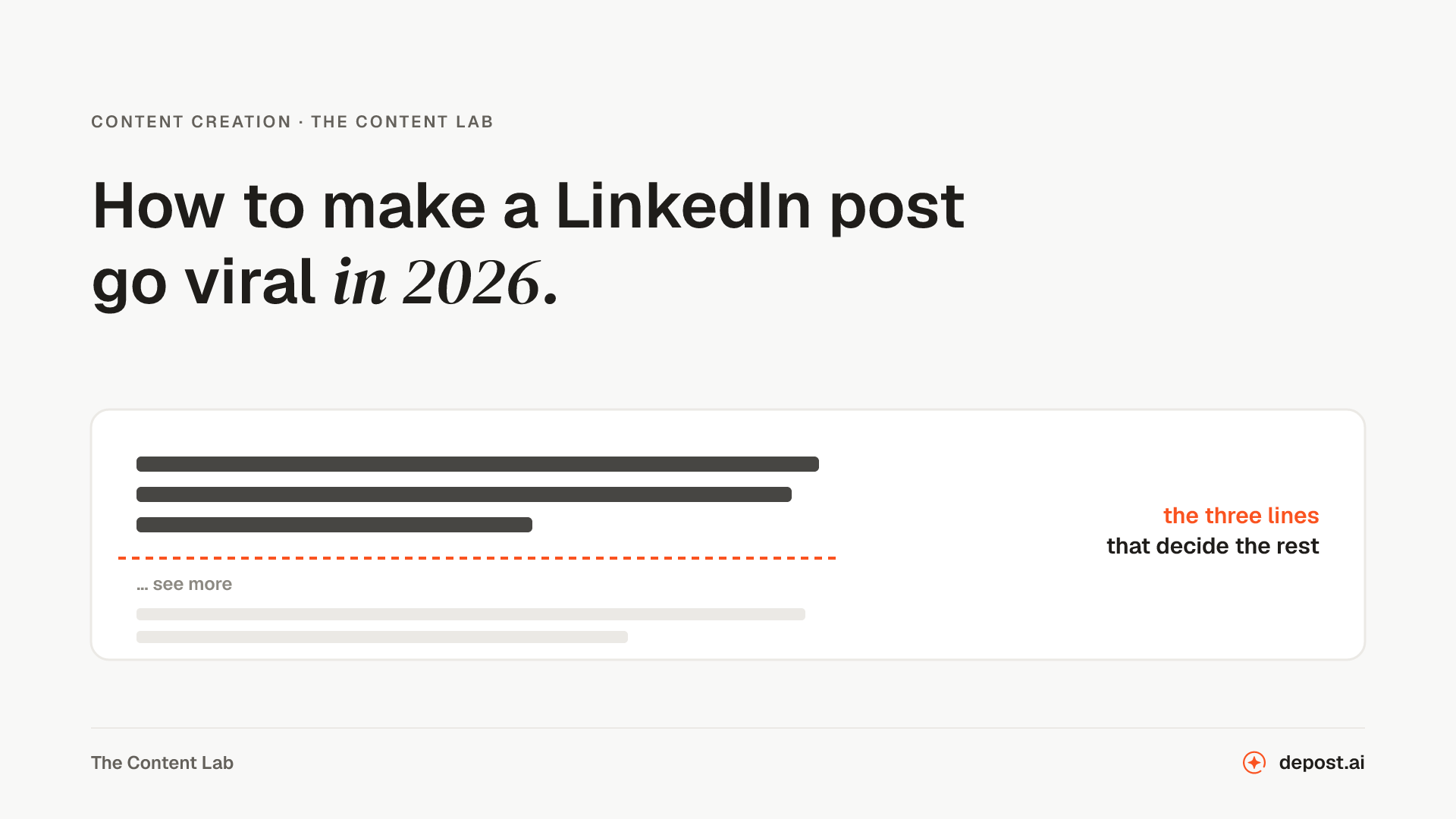 Content Creation10 Tips to Make LinkedIn Posts Go Viral in 2026Ten things that move a LinkedIn post in 2026, and what the March algorithm rebuild changed about how far one travels after the first hour.
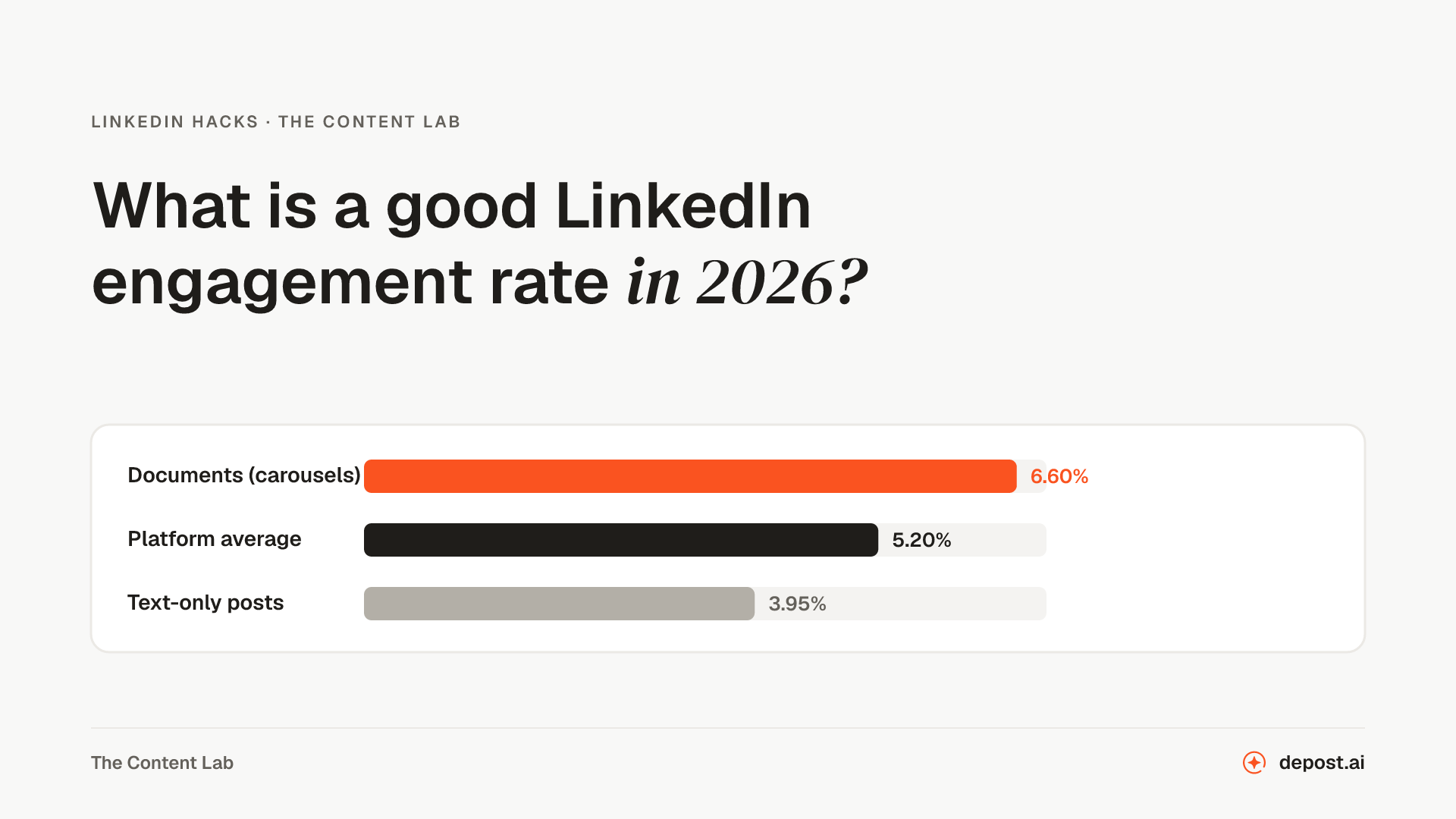 LinkedIn GuidesWhat Is a Good LinkedIn Engagement Rate in 2026? Benchmarks by FormatThe 2026 benchmarks by format, the three formulas behind them, why two different rates for the same post can both be right, and what actually moves the number.
Next
LinkedIn Post Booster
Paste a post that underperformed and get it rewritten, with every change named and the reason for it.
AI Content Detector for LinkedIn
Checks a draft for the patterns that make a post read as generated, and names the line that gave it away.
LinkedIn Hook Generator
Several openings for a post you have already written, since the first two lines are the only part most people see.
Make LinkedIn your
best-performing channel.
Brief your team once. It studies, plans, writes, designs, and schedules. You approve.
Your brief comes with you: once you're set up, it's the team's first job.
7 days free · Strategy in your first 15 minutes · Cancel anytime