Best time to post on LinkedIn
Three major studies currently answer this question, and they disagree by as much as twelve hours, which is the most useful fact on this page. The chart below draws all three on one track, named and dated, so you can see where they agree (midweek), where they do not (nearly everywhere else), and why your own analytics outrank any of them. Tell it where your audience is and where you are, and every window is shown on your own clock too.
Pick where your audience is and the chart tells you when to be at your desk.
Peak windows, three studies, one track
Hours on the track are your audience's local time, which is how each study reports. Tap a study to isolate it. Where the bands stack, the studies agree; where they sit twelve hours apart, that is the honest state of the research.
- Sprout Social
- nearly 2 billion engagements across 307,000 profiles, Nov 2025 to Feb 2026 · updated March 2026
- Buffer
- 4.8 million posts sent through Buffer · July 2026
- Hootsuite
- over 1 million posts across 118 countries · updated November 2025
Checked against each study's own page · Sep 5, 2026
Beyond one number
This page rates one post. Depost AI rates them all.
Connect LinkedIn and the Performance Analyzer benchmarks every post against your own average, names the hooks and formats that earn the engagement, and the next draft starts from what worked. Your full posting history, not a sample.
What the studies agree on, and what to do with it
The overlap is real but narrow. Wednesday appears in every study’s top tier. Midweek beats the edges of the week, and weekends are the weakest ground in all three datasets, which fits a professional network read mostly on work rhythms. That is the whole consensus, and it converts to advice in one line: post Tuesday to Thursday unless your own data says otherwise.
The divergence is just as instructive. Sprout Social’s two billion engagements point at 11am to 4pm. Buffer’s 4.8 million posts point at 3pm to 8pm, and their own note says the peak moved later since their 2025 analysis. Hootsuite’s million posts point at early morning. Three serious datasets, three different clocks, because each is averaging a different crowd. Any tool that shows you a single confident heatmap is showing you one of these studies with the sources filed off, or worse, no study at all.
The study that actually fits your audience
You are already running it. Every post you publish is a data point about your audience specifically: when they saw it, when they answered. A few weeks of consistent midweek posting, read honestly in your analytics, tells you more about your best hour than all three studies combined, because your buyers are not an average. The engagement rate calculator on this site gives each post a benchmarked read, and once the pattern is visible, timing stops being a research question and becomes a habit.
Questions
- So when is the best time to post on LinkedIn?
- Midweek, and beyond that the honest answer is "it depends who you ask". All three current major studies rate Wednesday highly and weekends poorly. On the hour they diverge completely: Sprout Social finds late morning through afternoon, Buffer finds 3pm to 8pm, and Hootsuite finds early morning. Midweek at a time your audience is plausibly awake captures most of what timing offers.
- Why do the studies disagree so much?
- Each measures its own customers, and those customer bases live in different industries, regions, and time zones. Averaging millions of unlike audiences produces a number that describes none of them exactly. The disagreement is not sloppiness; it is what happens when a question whose true answer is "your audience specifically" gets answered at population scale.
- Which timezone are the times in?
- The track is in your audience's local time, which is how the studies report. Pick where your audience mostly is, and the second clock under the chart shows what those hours are on your own clock, detected from your browser and editable, so "11am where your readers are" also reads as "8pm at your desk". Offsets are worked out for today, so daylight saving is handled. If your buyers are spread across the US and Europe, there is no single clock to optimize, and a window like Sprout's 11am to 4pm is best read as "working hours where your readers are".
- How much does posting time actually matter?
- Less than the post. Timing decides how quickly your first readers arrive; the content decides what they do, and what they do decides the reach. A strong post at a mediocre hour outperforms a weak post at the perfect one, every time. Treat timing as the cheap five percent: worth taking, not worth agonizing over.
- How do I find my own best time?
- Post at a consistent midweek time for a few weeks, then check your analytics for when engagement actually arrives, and test one alternative window against it. Your own posting history is a study of exactly the audience you care about, with a sample nobody else has. It beats every chart on this page, including ours.
- Will these numbers change?
- Yes; they already did. Buffer notes that engagement moved later in the day compared with their 2025 analysis, into the evening. We re-check the studies and update this page; the date under the chart says when it was last verified.
From the blog
All posts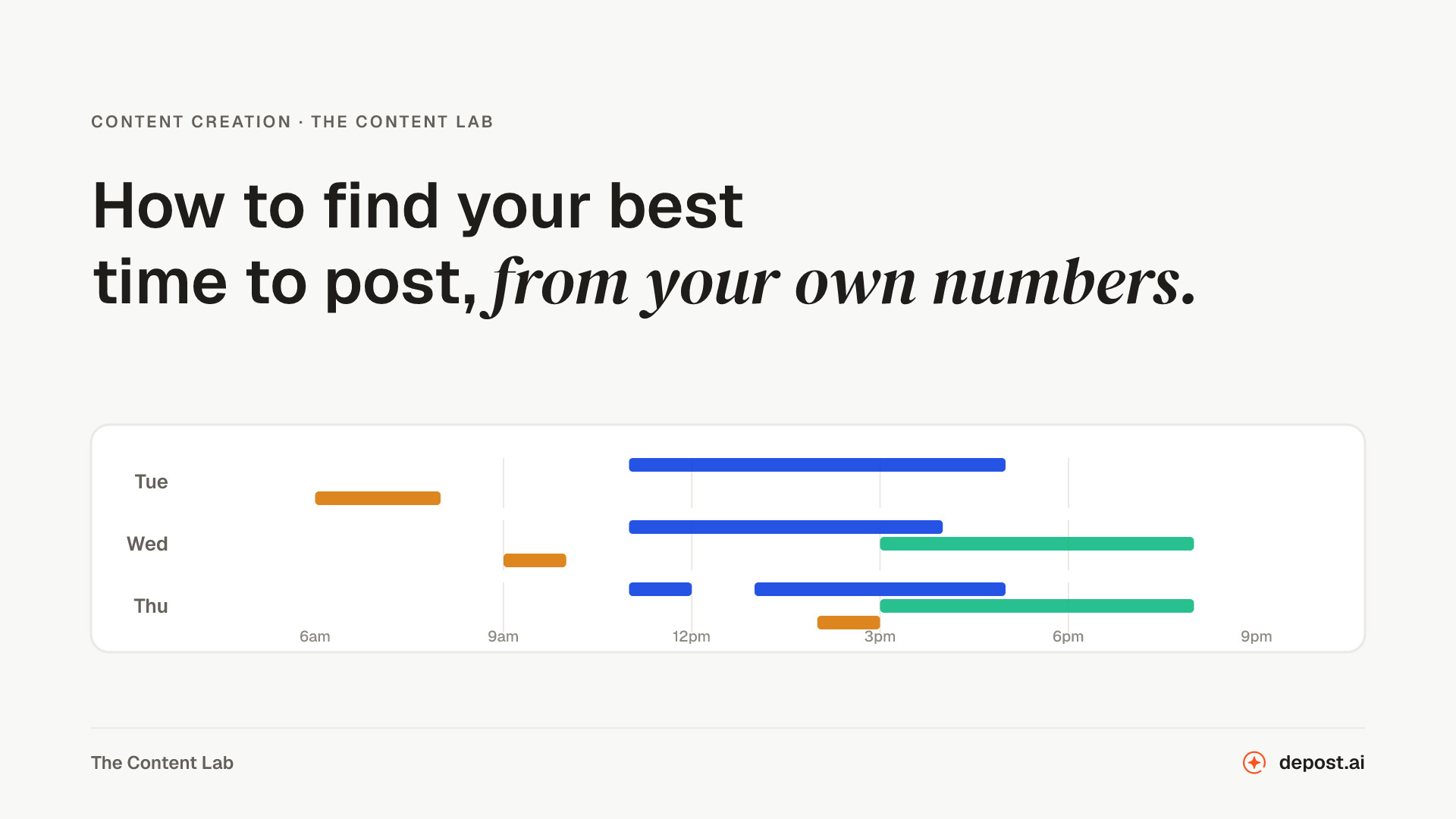 Content CreationBest Time to Post on LinkedIn: By Day, and How to Find YoursThe three current studies disagree by up to twelve hours, which tells you something. Here is what they say day by day, where they agree, and the four-week method for finding the window that fits your audience.
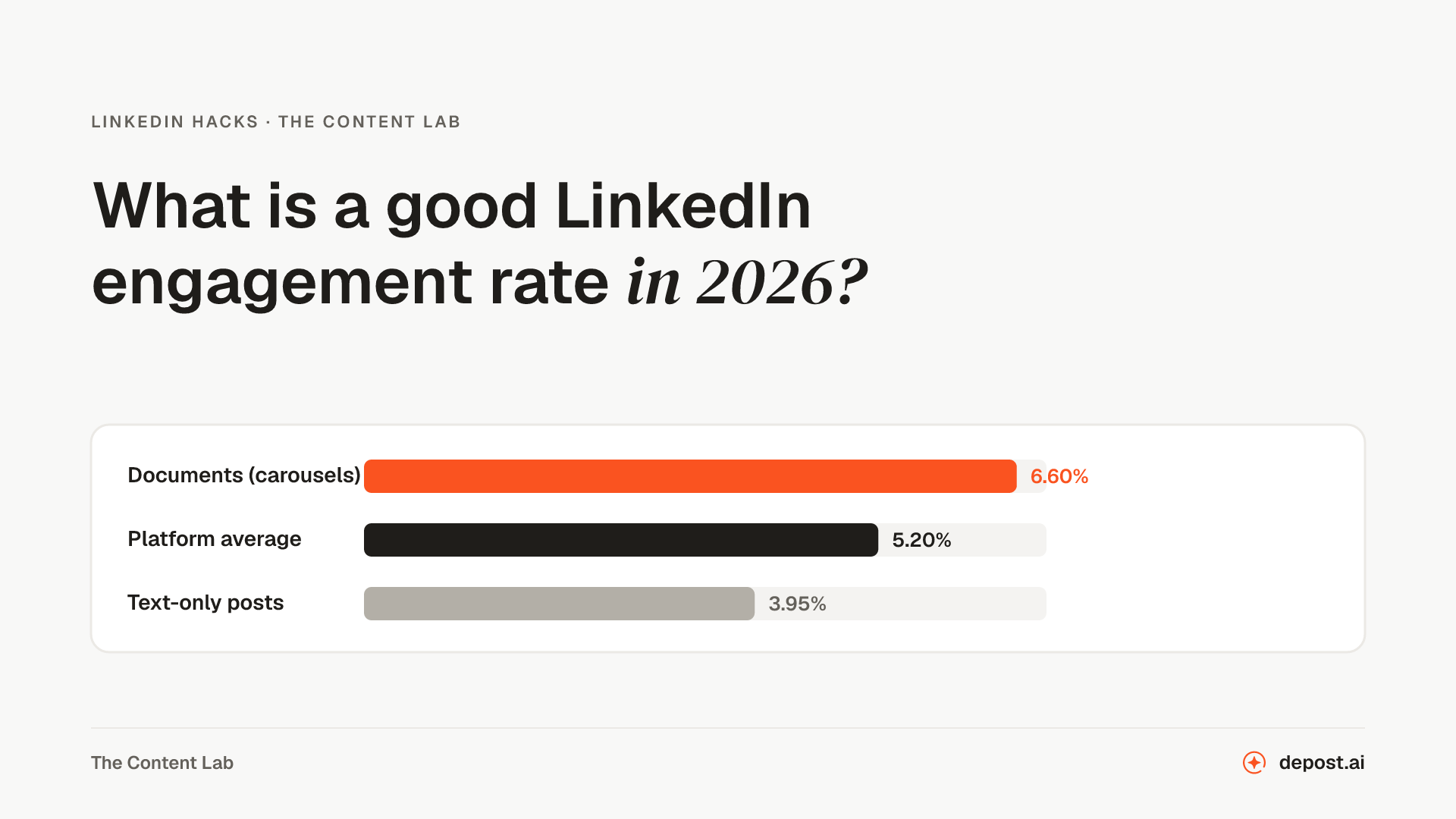 LinkedIn GuidesWhat Is a Good LinkedIn Engagement Rate in 2026? Benchmarks by FormatThe 2026 benchmarks by format, the three formulas behind them, why two different rates for the same post can both be right, and what actually moves the number.
 Content Creation10 Tips to Make LinkedIn Posts Go Viral in 2026Ten things that move a LinkedIn post in 2026, and what the March algorithm rebuild changed about how far one travels after the first hour.
Next
LinkedIn Post Date Extractor
The exact date and time a post or comment went up, to the second, read from the number in its link. Paste one link or a whole list.
LinkedIn Engagement Rate Calculator
Your engagement rate from impressions and interactions, next to the current platform average so the number means something.
LinkedIn Growth Plan Generator
A posting plan from your role, your niche, and the time you can honestly give it: pillars, cadence, and what to do in the first month.
Make LinkedIn your
best-performing channel.
Brief your team once. It studies, plans, writes, designs, and schedules. You approve.
Your brief comes with you: once you're set up, it's the team's first job.
7 days free · Strategy in your first 15 minutes · Cancel anytime