- What is the CR tag on LinkedIn?
- It is LinkedIn’s Content Credentials label. LinkedIn adds it to images and videos that carry signed C2PA Content Credentials, metadata inside the file that records what made it and whether AI was involved. Clicking it shows that record: the app or device, who issued the credential, and any statement about AI. It comes from the file, not from LinkedIn looking at the picture, and it can appear on photos from some cameras too.
- What does “Content Credentials label added” mean, and how do I remove it?
- LinkedIn shows that notice when the file you upload carries Content Credentials, and the post will show the CR tag once it is live. It is not a warning. To post without the label, drop the image above, download the clean copy, and upload that one instead.
- How do I remove the CR tag from a LinkedIn image?
- Drop the image above, download the clean copy, and upload that one to LinkedIn. The tool cuts the Content Credentials out of the file, so LinkedIn has nothing to read and no label to show. LinkedIn reads the file when you upload it, so for a post that is already up, the dependable fix is to post the clean image again.
- Does removing metadata lower the image quality?
- No. The common way to strip metadata is to save the image again, which is harmless for a PNG but changes pixels in a JPEG or WebP, and often drops the color profile. This tool cuts the metadata blocks out of the file and leaves the image data exactly as it was: the same pixels, the same file type, the same color profile, and the same rotation. The file usually gets smaller, because the metadata was the only thing taken out.
- How do I check if an image has Content Credentials?
- Drop it above. The tool reads the file and lists what it carries: Content Credentials and who signed them, whether they mark the image as made or edited with AI, EXIF, GPS location, and AI prompts. If there are no Content Credentials, LinkedIn has nothing to show a CR tag for. Downloading the clean copy is optional, so it works as a checker too.
- Does it work on videos?
- Yes, MP4 and MOV. LinkedIn shows the CR tag on videos with Content Credentials too. The tool removes the credentials, XMP, and the device and location data phones record, and rewrites the internal offsets so the video plays exactly as before: the frames are not re-encoded. Videos stored in fragments are left unchanged, because cutting them safely is not possible without re-encoding.
- Which AI tools add Content Credentials?
- OpenAI and Adobe both say their image generators attach C2PA Content Credentials, which covers images made in ChatGPT and in Adobe Firefly. Other generators and editing apps add it too, and the list grows. The tool names the signer when the credentials say who it was, so you can see where a label would have come from.
- Does this make an AI image undetectable?
- No, and it is not meant to. It removes metadata, the information stored alongside the picture. Some generators also hide a watermark in the pixels themselves: OpenAI says it uses SynthID watermarks alongside Content Credentials, and Google uses SynthID too. Removing metadata does not touch a watermark in the pixels. A visible logo or sparkle drawn into the corner is part of the picture too, and has to be cropped. Where it matters that an image was made with AI, say so in the post.
- What else does it remove?
- Everything that is not the image: EXIF data such as the camera, the software, and the GPS location where a photo was taken, XMP and IPTC fields, comments, and the prompt and settings some AI tools write into PNG files. The GPS location is worth removing from any photo before posting it publicly, AI or not.
- Are my images uploaded anywhere?
- No. The files are read and cleaned in your browser, on this page, and the clean copies are saved straight to your device. Nothing is sent to our servers.
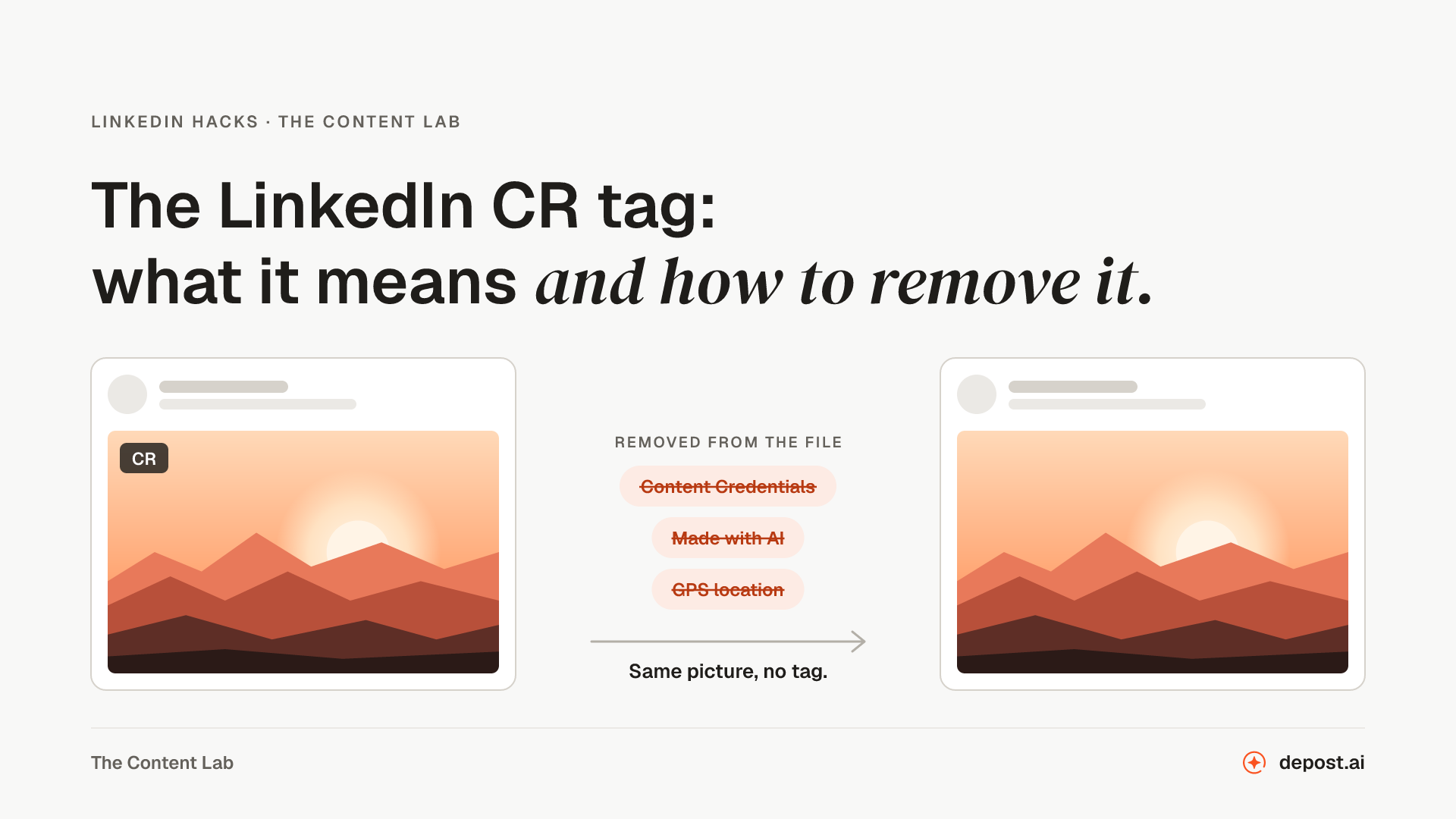 LinkedIn HacksThe LinkedIn CR Tag: What It Means and How to Remove ItThe CR tag on a LinkedIn image means the file carries Content Credentials. What they say, which tools add them, how to check an image before you post, and how to remove the CR tag without losing quality.
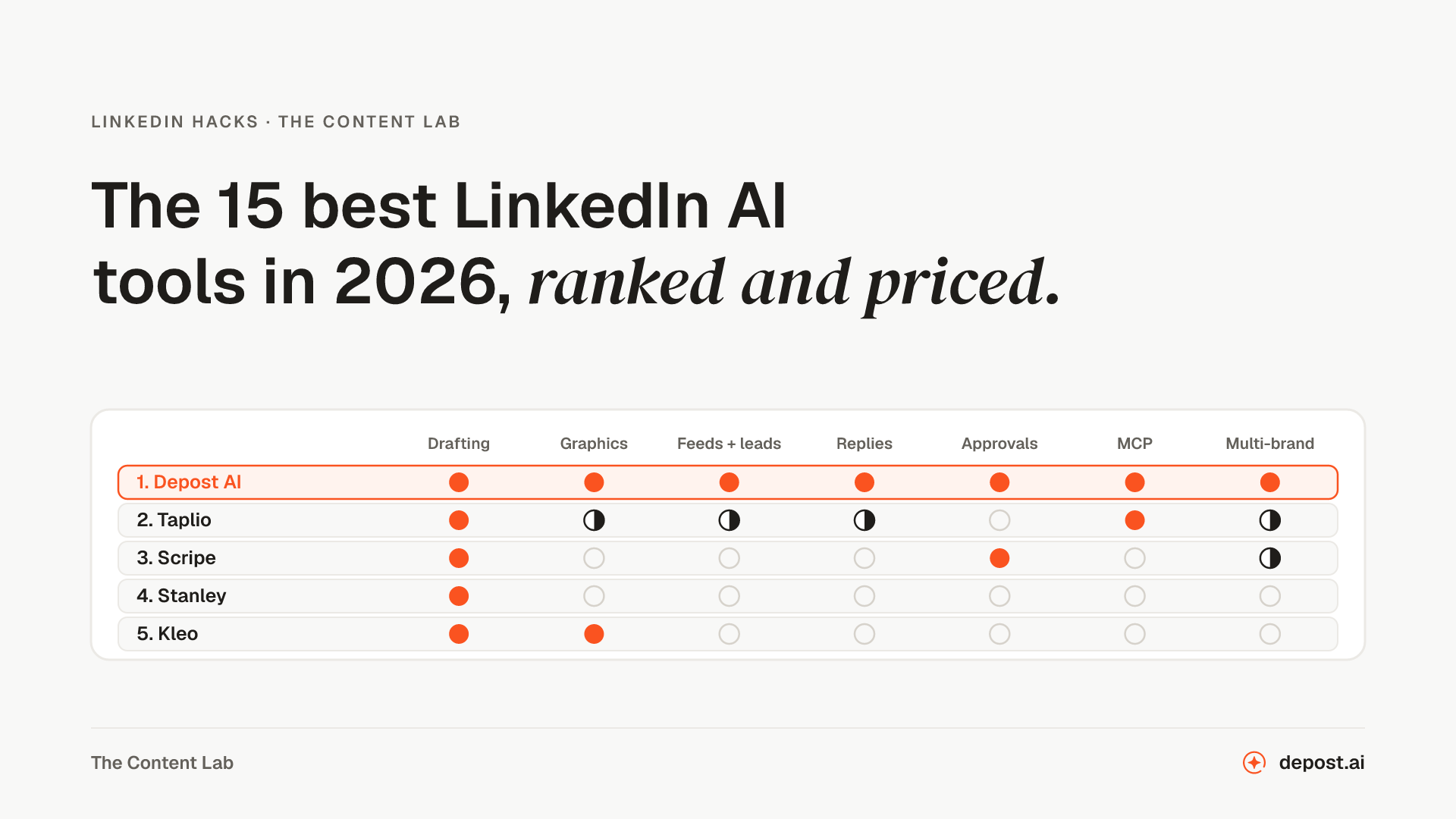 LinkedIn Hacks15 Best LinkedIn AI Tools in 2026, Ranked and PricedFifteen LinkedIn AI tools ranked, with what each one covers beyond writing the post, what it sends from your account without you, how the price scales past one person, and current monthly prices.